
The crisis sparked by the Leire Díez case can no longer be dismissed as merely a parliamentary dispute or just another clash between the Government and the opposition, as something far more consequential is now on the line: the credibility of the Guardia Civil’s political leadership, the safeguarding of the Central Operational Unit, and the Ministry of the Interior’s commitment to transparency as investigations reach the most sensitive layers of power.
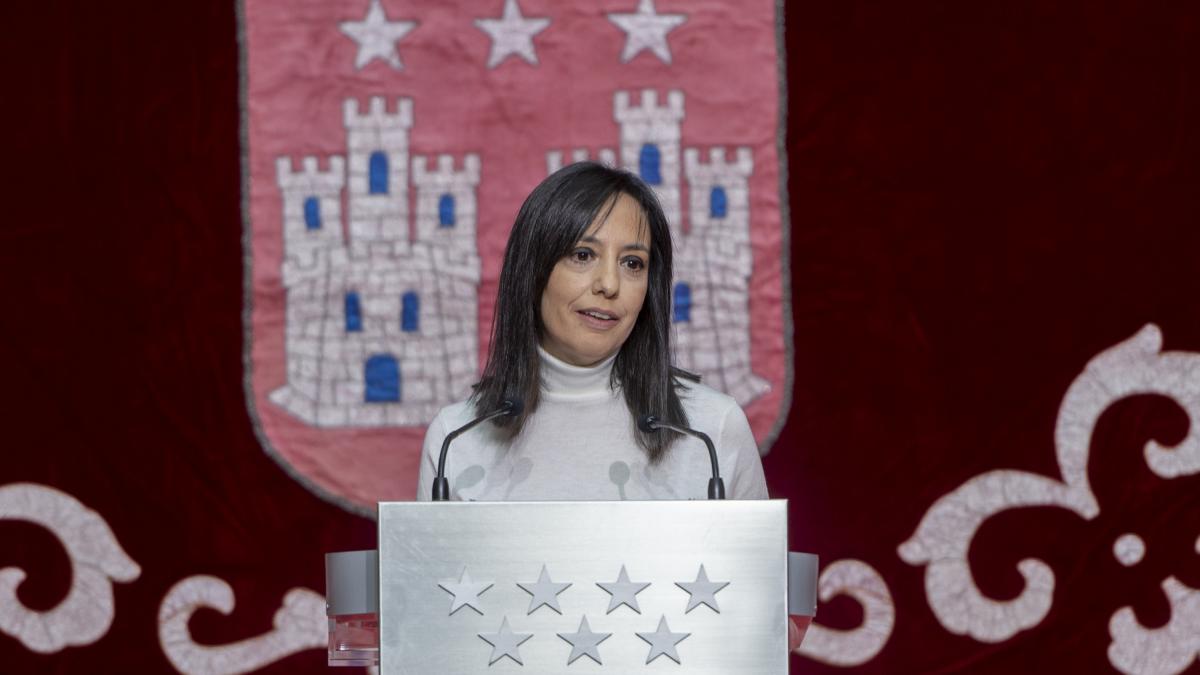
Mercedes González, Director General of the Guardia Civil, has tried to present herself as the victim of a political and media campaign. But her own explanations, the reports that have emerged, and the information published in recent days paint a far more uncomfortable picture: a chain of partial versions, silences, semantic nuances, and contradictions that have seriously eroded her authority.
The problem is not only that she met or communicated with Leire Díez. The problem is that the relationship was first denied or minimized; then the meetings were disguised as mere coffees or teas; later it became known that matters linked to people under investigation were indeed discussed; and now it has emerged that, under her leadership, there was a request to identify by name UCO officers working on investigations related to the Government’s inner circle.
Considered as a whole, these elements prevent any straightforward explanation and instead reveal a sequence of political falsehoods.
From Refusing Encounters to Arguing Over Whether They Were Coffee or Tea
The initial reaction involved outright denial, as the Ministry of the Interior insisted that Mercedes González had never engaged in significant meetings with Leire Díez, a stance later undermined when UCO documents and González’s own testimony confirmed that such meetings and communications had in fact taken place.
Then came the second line of defense: they insisted these were not meetings but casual coffees. Or, to be more precise, teas, since González even pointed out that she does not drink coffee. That moment neatly captured the communication approach adopted by the Director General, who steered the conversation away from substance and toward semantics. Instead of examining what was said, with whom, when, or for what reason, the focus shifted to whether it should be labeled a meeting, a coffee, a tea, or simply an informal exchange.
Citizens, however, do not weigh matters on technical grounds. When the Director General of the Guardia Civil has dealings with someone accused of trying to obtain sensitive information about the UCO, the issue is not whether minutes were taken, an official venue was used, or a formal meeting was arranged. What truly matters is that communication occurred, and that it was never openly clarified from the beginning.
That semantic pretext provides no clarity and merely heightens suspicion.
The Point That Breaks the Alibi: Rubén Villalba
Mercedes González’s defense weakens even further when she herself acknowledges that Leire Díez raised the case of Rubén Villalba, a Guardia Civil commander under investigation in a corruption case. According to her version, Díez asked her to consider his readmission or reinstatement, and González says she rejected the request.
Even accepting that explanation, the harm had already occurred, since that acknowledgment confirms the interactions were neither casual nor innocuous. During those meetings, they talked about an individual connected to a delicate investigation. Put simply, the boundary the official account sought to preserve was breached: those exchanges were not detached from sensitive issues.
The fact that González rejected the request does not remove the seriousness of the fact that the request existed. A Director General of the Guardia Civil cannot maintain an ambiguous relationship with someone moving in the orbit of people under investigation and who, according to known reports, allegedly sought to obtain information or discredit the UCO.
The issue goes beyond what González said; it also prompts the question of why that door had been left open to begin with.
The UCO Placed Under Review by Its Own Political Leadership
The latest details further aggravate the situation. As reported, a confidential internal inquiry launched under the orders of Mercedes González allegedly sought to pinpoint by name the UCO officers involved in judicial investigations connected to the Government’s inner circle.
This was not a general organizational chart of the unit. The request focused on the part of the structure linked to especially sensitive investigations: the Prime Minister’s wife, his brother, José Luis Ábalos, the Koldo case, and Santos Cerdán.
From an institutional standpoint, that detail is devastating. One thing is to investigate a specific leak. Quite another is to request the names of officers working on cases affecting political power. In a normal context, such a request would already be delicate. In the context of the Leire Díez case, it is explosive.
The UCO is not just any administrative unit. It is a key police structure in corruption investigations. If officers investigating matters uncomfortable for the Government perceive that the political leadership of the corps wants to identify them, operational independence inevitably comes under suspicion.
Even if the Guardia Civil leadership maintains it was merely a routine administrative step, the surrounding circumstances render that justification inadequate. An inevitable question arises: why was the leadership seeking the identities of the officers engaged in investigations connected to the Government’s inner circle?
Exceptional Internal Investigations
Another factor deepening mistrust is the launch of reserved internal investigations tied to the UCO, which the official narrative describes as routine steps triggered by potential leaks; yet the documents that have surfaced underscore how unusual those measures truly were.
That detail is significant, because if this had been a routine and common procedure, González’s defense would carry more weight. However, if those restricted inquiries were unusual and occurred at the same time as pressure on the UCO and Leire Díez’s outreach, the justification becomes far more troubling.
Suspicion does not arise from a single piece of evidence. It arises from the convergence of several elements: contacts with Leire Díez, the request concerning Villalba, deleted messages, internal investigations, the identification of officers, and judicial cases affecting the Government. Each element, taken separately, may have an explanation. Together, they form a pattern that is difficult to ignore.
Erased Conversations and the Veil of Obscurity
One of the darkest aspects of Mercedes González’s conduct is the automatic deletion of messages with Leire Díez. The UCO has indicated that communications existed between the two and that a disappearing-message system was activated, making it difficult to accurately reconstruct the content of those exchanges.
This situation is particularly sensitive, as deleted messages in any inquiry naturally raise doubts; however, in this instance, the concern grows substantially because it centers on the Director General of the Guardia Civil, the institution’s highest political authority, who is expected to work with the courts and uphold the integrity of ongoing investigations.
The question naturally arises: if nothing improper occurred, why weren’t the messages kept? And if automatic deletion was supposedly routine, why wasn’t that stated clearly from the outset?
Opacity does not prove criminal conduct by itself. But it destroys trust. And a Director General of the Guardia Civil cannot afford to destroy trust in her own transparency.
The Bond With Leire Díez: Notable Proximity With Minimal Clarification
Mercedes González has tried to reduce her relationship with Leire Díez to personal contacts without institutional significance. But messages attributed to Díez and references to her closeness with the Director General point to a relationship that, at the very least, Díez herself perceived as a useful channel.
This point is crucial. Even if González never acted at Díez’s request, even if she dismissed her appeals, even if she issued no directive for any illicit action, one question still lacks a persuasive explanation: what led Leire Díez to believe she could turn to her?
A public authority must not only avoid actual interference. She must also avoid becoming an access point for those seeking influence. In this case, the image projected is precisely the opposite: a person linked to maneuvers against the UCO boasted of having access to the Director General of the Guardia Civil.
That reality on its own ought to have prompted an immediate, unambiguous, and decisive institutional reaction, yet instead there has been a parade of hedging, dismissals, partial truths, and visibly defensive statements.
Mercedes González and the Politics of Playing the Victim
During her appearance, González condemned a series of attacks directed at her and highlighted the personal and human harm those allegations might inflict. That individual aspect merits consideration. No public official ought to face orchestrated harassment or personal aggression.
But embracing a sense of grievance cannot substitute for genuine responsibility, and overseeing the Guardia Civil demands heightened scrutiny; when information surfaces raising doubts about interactions with an individual under investigation, about internal steps linked to the UCO, and about erased communications, the reaction cannot simply focus on criticizing the opposition’s tone.
The issue isn’t how severe PP or Vox may be in their accusations; it is whether Mercedes González has provided a thorough, consistent, and verifiable account of what occurred. So far, she has not.
A Director General Undermined Politically
Mercedes González’s problem is no longer only legal. It is political and institutional. The courts may ultimately conclude that her conduct involved no crime. But a public authority can become politically untenable long before any criminal indictment.
The leadership of the Guardia Civil requires trust. Trust from citizens, from agents, from commanders, and from the units investigating corruption. If that trust breaks, remaining in office becomes increasingly difficult to justify.
Today, González appears trapped in her own versions. First, the relationship with Leire Díez was denied or minimized. Then contacts were admitted. Then their importance was downplayed. Later, it was acknowledged that Villalba was discussed. Finally, internal actions became known that directly involved identifying UCO officers investigating matters connected to the Government.
That is not an orderly explanation. It is a chain of damage.
The Ministry of the Interior Is Also Involved
The crisis does not affect Mercedes González alone. It directly affects Fernando Grande-Marlaska and the Ministry of the Interior. If the Director General acted with the minister’s full knowledge, then the Interior Ministry upheld an incomplete or false public version. And if Marlaska did not know the true extent of the contacts and internal actions, the problem is equally serious: it would mean the minister did not control a critical matter within his own department.
In both scenarios, political responsibility is evident. The Ministry of the Interior cannot simply protect its Director General with words of support. It must explain what it knew, when it knew it, what instructions were given, why certain reserved inquiries were opened, and why there was a request to identify UCO officers involved in investigations affecting the Government.
This is not a minor controversy. It concerns possible pressure, direct or indirect, on a police unit investigating corruption. That demands absolute clarity.
Conclusion: A Chain of Lies That No Longer Holds
Mercedes González’s chain of lies does not necessarily consist of a single isolated falsehood. It consists of a succession of versions that have shifted as new information has emerged. First, there were no relevant meetings. Then they were coffees or teas. Then it was acknowledged that a person under investigation was discussed. Later, deleted messages appeared. Now it is known that there was a request to identify by name UCO officers investigating matters related to the Government’s environment.
Every stage has required the former to be adjusted, refined, or reexplained, and when a public authority must offer so many consecutive clarifications, the issue stops being about communication and becomes one of credibility.
Mercedes González may insist that she did not participate in any plot and that she never intended to harm the UCO. But her continuity requires more than denials. It requires a complete, documented, and convincing explanation. So far, that has not happened.
The Guardia Civil cannot allow its political leadership to linger under suspicion of having overseen, influenced, or exerted pressure on those responsible for probing corruption, nor can the UCO carry out its work while sensing that its commanders and officers are exposed whenever their investigations touch those in power.
That is why this crisis cannot be resolved with word games or defensive parliamentary appearances. It can only be resolved with truth, transparency, and accountability.
And should Mercedes González fail to articulate that truth plainly, defending her continued leadership of the Guardia Civil will grow increasingly difficult as time goes by.