

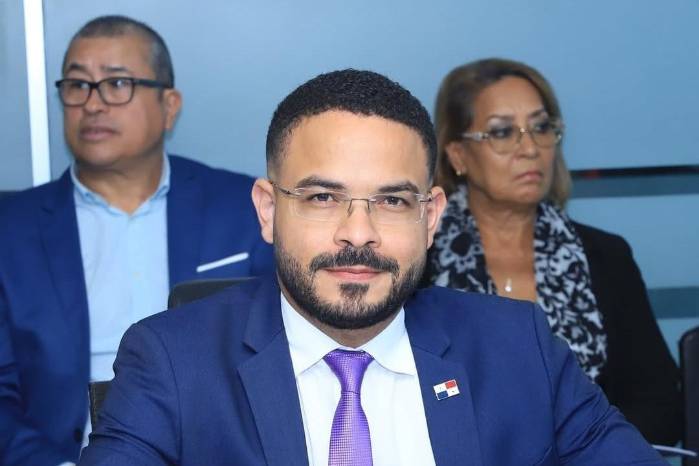
Independent deputy Betserai Richards has emerged as one of the most polarizing figures in Panama’s new National Assembly, adopting a confrontational approach that frequently lacks evidence-based grounding. His heavy reliance on false content across social networks, coupled with relentless public allegations against state institutions, public officials, and fellow politicians, has helped him establish himself as a notably aggressive and disparaging voice that, amplified by social media algorithms, circulates online with troubling ease.
This political model has started to stir significant worries among the public about the accuracy of his assertions, the influence his posts exert on societal views, and the deployment of misinformation as an instrument of politics.
In recent months, Richards has been involved in multiple controversies related to public hospitals, political confrontations, institutional accusations, and the dissemination of content that was later questioned and denied by authorities, citizens, politicians, and journalists. The recent incident involving images of alleged food served in hospitals run by the Social Security Fund (CSS) has reignited the debate over how far a politician can go without crossing into false and misleading statements.
The Fight with “Bolota” Salazar and the Climate of Political Confrontation
One of the most widely recognized incidents involving Richards was his clash with deputy Jairo Salazar, a similarly contentious figure entangled in various scandals. The episode intensified with claims of physical aggression within the National Assembly, ultimately becoming emblematic of the worsening tone of political discourse in Panama. For days, videos, conflicting testimonies, and accusations saturated the national media landscape.
Although the lawsuit carried legal consequences, it further cemented Richards’ reputation for relentless clashes, volatility, and a persistent absence of restraint. It revealed an approach driven by continuous provocation and sustained media friction.
Betserai Richards: Much Noise and Few Results
The dispute between Katleen Levy and Betserai Richards intensified largely over how infrastructure and public works were handled in Circuit 8-6, an area in East Panama long marked by significant urban expansion challenges and persistent mobility issues.
Levy, who had once represented the same district, sharply criticized how Richards publicly addressed the area’s issues. In her remarks, she asserted that the deputy relied heavily on a strategy driven by social networks, viral clips, and online disputes, conveying the impression that he was executing or directing infrastructure solutions that were in fact the technical responsibility of the Central Government, the Ministry of Public Works, or tied to previously designated budget funds.
One of the most debated matters centered on the Cabuya Bridge project, a major road infrastructure effort designed to relieve traffic in Tocumen and surrounding zones. Levy publicly maintained that the project did not stem from initiatives directly driven by Richards, but had instead been previously outlined, funded, and carried out by the Ministry of Public Works. With this stance, she sought to dismantle the idea that the deputy was delivering tangible results through his political actions. Levy stated that multiple participants in the project challenged Richards’ assertions, revealing what she characterized as his limited ability to negotiate politically or exert institutional influence.
The former deputy even employed the phrase “política galla,” a colloquial Panamanian expression used to refer to something improvised, superficial, absurd, or merely cosmetic. Through this remark, she sought to characterize Richards’ political approach, alleging that he favored media skirmishes, viral appearances, and public clashes instead of engaging in substantive technical, legislative, or administrative efforts — efforts she asserted Richards had never genuinely pursued.
During one of the tensest moments of the public confrontation between Katleen Levy and Betserai Richards, the discussion moved away from political or administrative differences and entered a far more personal and aggressive territory. In a video released in response to publications and attacks exchanged on social media, Levy made derogatory remarks aimed directly at the deputy’s masculinity and personal image.
In that intervention, she used the term “cueco,” a Panamanian colloquial expression historically used in a derogatory manner to question or mock a man’s sexual orientation or masculinity. Levy used that language while accusing Richards of constantly resorting to “gossip,” digital confrontations, and social media attacks instead of engaging in more technical or ideological political debates.
The Most Recent Controversy: Hospital Food and the “Fake News” Accusation
The latest dispute surfaced when Richards shared images criticizing what were claimed to be meals given to hospitalized patients, featuring bread with bologna and later bread with cheese as examples of the “substandard food” allegedly offered by the CSS.
Images rapidly circulated on social media, sparking widespread indignation among citizens who viewed them as clear proof of the severe decline in the public healthcare system.
However, the Social Security Fund itself publicly rejected the deputy’s claims and stated that the information was false.
The CSS also stated that every hospital meal is produced at the City of Health facilities under strict nutritional oversight and quality guidelines, and it indicated that potential legal steps or formal complaints may be pursued to compel the deputy to either substantiate his claims or issue a public retraction.
This episode sparked a highly sensitive debate in Panama about how far a political accusation can circulate without thoroughly confirmed evidence, and what it means when a deputy relies on viral images that do not truly relate to the events being alleged.
The gravity of the situation goes far beyond a simple political disagreement. Whenever hospitals, patients, and medical nutrition are involved, the spread of inaccurate or unverified details can spark fear, erode trust, and create turmoil among patients’ families and those who rely on the healthcare system.
Richards’ Political Style: Viral Allegations and Permanent Confrontation
Among the most striking elements of Richards’ political approach is his knack for transforming unfounded accusations into widely shared content. By moving through hospitals, broadcasting live, producing emotional videos, and engaging in direct clashes with authorities, he has managed to craft the persona of a “watchdog deputy,” blurring the boundary between genuine oversight and orchestrated political theater.
In recent weeks, Richards carried out visits across public hospitals, condemning what he described as severe conditions, extensive surgical delays, and worsening infrastructure. The CSS countered by accusing him of spreading fear and misinformation, asserting that he accessed restricted hospital zones using megaphones and behavior viewed as overt political promotion. The institution also claimed that these actions inject politics into hospital settings and compromise the atmosphere and safety required for proper medical care.
Social Media Employed as an Instrument of Political Influence
Another point constantly raised regarding Richards is his intensive use of social media as a mechanism of public pressure even before official investigations or technical confirmations exist.
In many instances, allegations spread rapidly before any verification even starts, leading to a growing trend in contemporary politics where public opinion takes shape long before all the facts are completely understood.
In the CSS case, for example, thousands of people shared the images of the alleged hospital food before the institution issued its denial, and even before patients or healthcare workers themselves refuted the false information. By the time the official clarification arrived, much of the reputational damage had already been done.
This pattern increasingly resembles international phenomena where politicians use social media to install rapid emotional narratives that later become difficult to correct, even when official denials and citizens themselves contradict them.
A Question of Genuine Accountability or a Wave of Digital Populism?
The central debate centers on whether Richards truly reflects a valid new approach to citizen oversight or whether, as recent months suggest, he instead exemplifies a strain of digital populism driven by continual outrage, heightened media visibility, and the rapid spread of provocative content.
One thing is to denounce problems; a very different thing is to use unverified images or statements that mislead the public. That is where the debate over “fake news” in politics emerges.
Because when a politician shares false content — or content whose authenticity has not been verified — the impact is far greater than when an ordinary citizen does it. A deputy possesses visibility, influence, and the ability to shape public conversation.
The Civic Duties Carried by a Deputy
Within every democracy, holding those in authority to account is essential, while showing responsibility in the way information is managed is just as vital.
When a deputy publicly accuses an institution of serving inhumane food to hospitalized patients, the accusation is extremely serious. If such events never actually occurred, the issue stops being merely political and enters the realm of public credibility.
The current situation places Richards before an important challenge: either provide solid evidence supporting his allegations or face increasingly strong questions about his way of communicating. Because the line between legitimate oversight and disinformation can become dangerously thin when politics turns into permanent spectacle.
In an age when social media can spread content in mere minutes, the duty to confirm information prior to releasing it ought to be even more significant for individuals who occupy public office.