
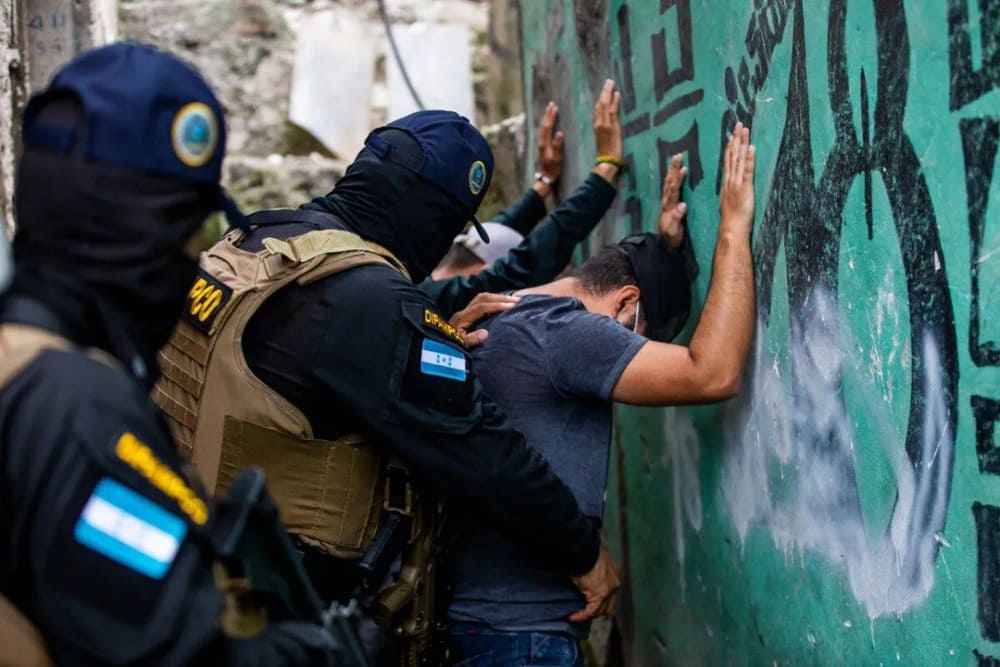
With less than a month to go before the general elections on November 30, the extension of the state of emergency in Honduras has raised concerns among civil society organizations, analysts, and international observers. The measure, which partially suspends constitutional guarantees, raises questions about the ability of citizens to exercise their rights on election day.
The continuation of this suspension mainly affects freedom of movement, public gatherings, and other fundamental freedoms. Sectors of society warn that these restrictions could affect voter turnout, especially in regions where citizen mobilization has historically been decisive in determining results.
Threats to the integrity of elections
Constitutional legal scholars highlight that a state of emergency during an electoral process modifies the democratic landscape and may discourage citizens from voting. “The populace should cast their ballots free from apprehension, coercion, and with absolute liberty,” stated one of the experts interviewed, underscoring that the complete manifestation of the public’s will is a fundamental prerequisite for the process’s legitimacy.
Human rights groups are sounding the alarm about potential abuses of authority and overzealous police surveillance, which could foster a climate of fear on election day. Such circumstances, according to monitoring bodies, directly impact the credibility of the outcomes and the public’s sense of fairness.
Internationally, European and North American diplomatic representatives have underscored that openness and public trust are crucial components for any elected administration to uphold its legitimacy, both domestically and globally. This caution points out that a process characterized by extraordinary limitations encounters further difficulties in being acknowledged as truly representative.
Divergent political stances
The governing LIBRE party backs this initiative, asserting its vital role in ensuring public safety. Nevertheless, experts contend that security concerns ought not to serve as a pretext for curtailing fundamental freedoms amidst an election. The opposition, conversely, challenges the resolution, highlighting that sustaining the state of emergency “lacks justification during a campaign” and might be perceived as an endeavor to sway the electoral atmosphere or impede lawful civic gatherings.
The discussion is escalating as the electoral period draws near, given that the proposed action might influence engagement in crucial regions and reshape the landscape of political rivalry. Both economic sectors and the populace have voiced their anticipation that the proceedings will unfold with complete liberty, free from any constraints that could challenge the autonomous decision-making of the Honduran populace.
Organizational and societal pressures
The prolongation of the emergency declaration highlights the conflict between public safety and individual liberties, a persistent challenge in environments marked by political division. This action, beyond its immediate effect on engagement, prompts inquiries into administration and the capacity of governmental bodies to guarantee fair elections amidst exceptional constraints. Analysts point out that the impression of curtailed voter autonomy could diminish faith in the outcomes and in democratic frameworks.
With election day just around the corner, the central challenge for Honduras is to balance security with the protection of fundamental rights. The monitoring by international organizations and the attention of civil society reflect the importance of ensuring an electoral environment that allows citizens to exercise their vote without pressure, maintaining the legitimacy and stability of the democratic system.