

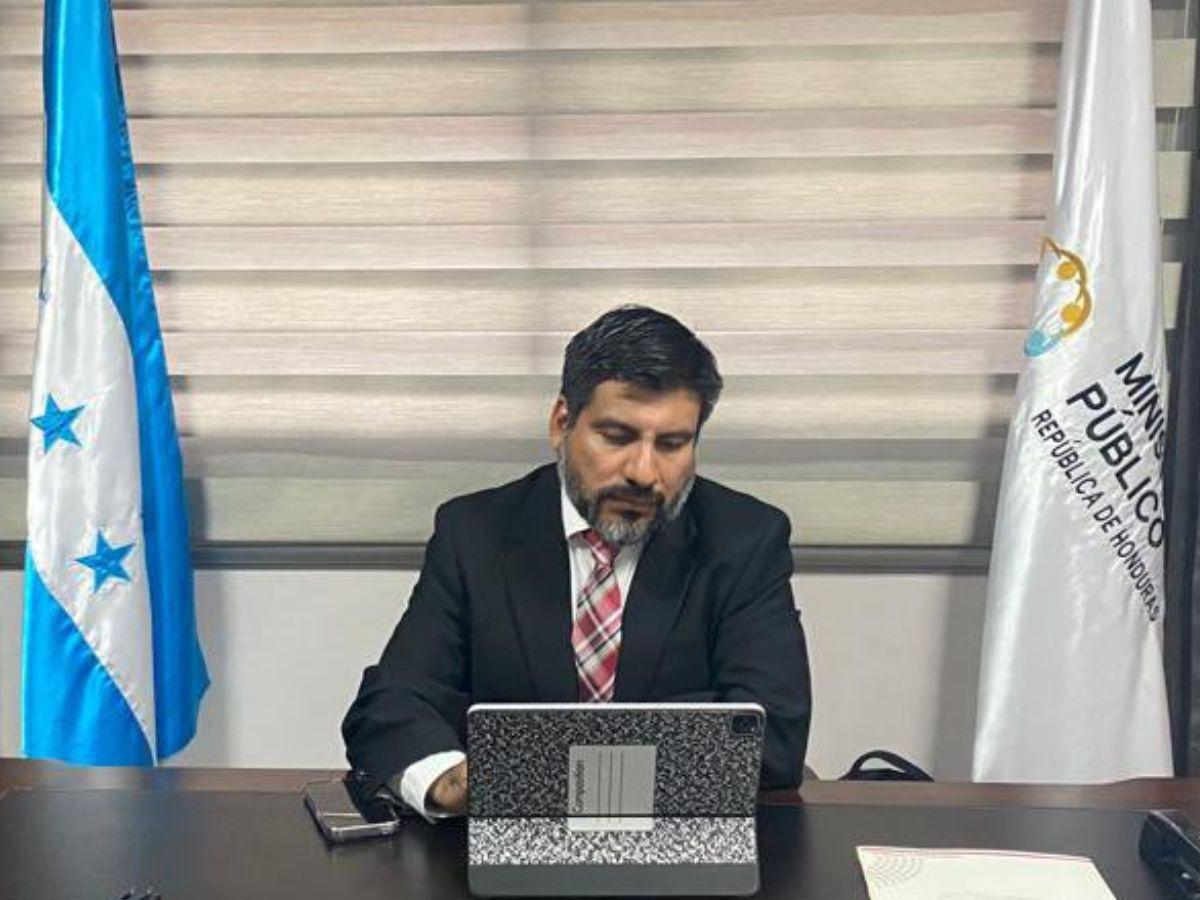
Honduran Attorney General Johel Zelaya is facing intense public and institutional scrutiny after being accused by various political and social sectors of favoring the ruling LIBRE party in his decisions. The controversy intensified after he publicly denounced an alleged assassination attempt against former President Manuel Zelaya, which opponents and analysts interpret as a possible distraction from the structural problems facing the country.
Formal announcements and critiques from adversaries
The prosecutor’s version, presented as an act of prevention and institutional defense, was met with skepticism by opposition lawmakers and legal experts. Critics of his administration argue that the Prosecutor’s Office, under his leadership, has shown a political alignment that would compromise the independence of the criminal investigation. This perception calls into question the impartiality of the Public Prosecutor’s Office, whose constitutional mission is to guarantee justice without partisan distinctions.
La disputa surge en un momento en el que la población está exigiendo resultados tangibles en la lucha contra la corrupción, el tráfico de drogas y la violencia, desafíos que siguen afectando de manera directa la economía del país y el ambiente para la inversión.
Responses from professional and community groups
The Honduran Bar Association has joined the voices calling for a more autonomous Public Prosecutor’s Office with an agenda focused on prosecuting crime rather than political confrontation. Social organizations and legal actors insist that the loss of institutional credibility limits the state’s ability to combat impunity. This situation also creates an environment of uncertainty that discourages private investment, a key factor in promoting development and generating sustainable employment.
Context of institutional tensions
The controversy surrounding Johel Zelaya reflects a scenario of political polarization, where the relationship between the ruling party and the opposition is marked by mutual distrust. Critics warn that the use of the Attorney General’s Office as a partisan tool threatens to weaken institutions and prolong a justice crisis that affects both political stability and the country’s economic prospects.
For civil society and the private sector, the immediate challenge is to restore the autonomy of the Public Ministry as an essential pillar of the democratic system. Without this credibility, efforts to combat organized crime, corruption, and violence face serious obstacles and undermine the confidence of domestic and foreign investors.
A structural dilemma
The present scenario exposes a fundamental challenge in Honduran politics: the challenge of distinguishing governmental roles from political agendas.
The role of the attorney general, questioned for his alleged closeness to LIBRE, has become a barometer of the institutional capacity to respond to society’s demands for justice and transparency.
The outcome of this controversy will not only set the course for governance and judicial independence, but also for the confidence of the private sector, which is essential for reviving the economy and contributing to the democratic strengthening of the country.