

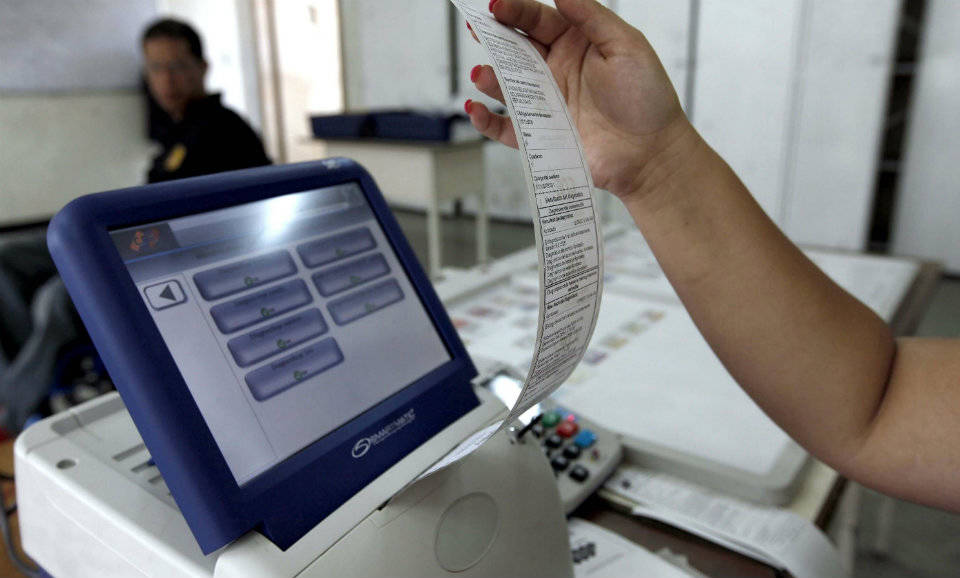
The dispute over the award of the contract for the Preliminary Electoral Results Transmission System (TREP) for the 2025 general elections has sparked a wave of criticism and accusations against the technology company Smartmatic. The firm, accused of being linked to several international electoral fraud scandals, is at the center of a debate that threatens to destabilize the electoral process and undermine confidence in Honduras’ democratic institutions.
Allegations of corruption and fraud tarnish electoral transparency
The controversy began with a direct accusation by Liberal Congressman Jorge Cálix, who said that giving Smartmatic control of the TREP system could jeopardize the transparency of the electoral process. Cálix stressed that the company has a history of involvement in electoral fraud in several countries, including Venezuela, the United States, the Philippines, Brazil, and Argentina, which fuels mistrust among political sectors and the public.
The legislator denounced that, as a company founded in Venezuela, Smartmatic is linked to a series of irregularities in international electoral processes, which could be replicated in the upcoming Honduran elections. In his view, allowing Smartmatic to manage the TREP represents an unacceptable risk to the legitimacy of the elections.
The company, on its side, has denied the allegations, labeling them as a “propaganda move.” Smartmatic representatives assert that they functioned with full transparency during the 2025 primaries in Honduras and that their voting systems have undergone audits and received validation from multiple global organizations.
The refusal and internal political conflicts
The controversy has escalated due to the boycott by parts of the governing LIBRE party, who have hindered other competing companies from entering, thereby supporting only Smartmatic’s bid. This has raised doubts among the opposition, who allege that the ruling party aims to benefit the company in a move that might influence the election outcomes.
In the midst of these confrontational circumstances, various political figures have voiced their worries regarding the potential effects this control may have on the public’s trust in the electoral process. The opposition believes that permitting Smartmatic to handle the transmission of early results might lead to opportunities for manipulation and fraud, particularly in the face of the polarized political climate and increasing skepticism toward the nation’s institutions.
Global influence and the challenge of authority
Apart from internal conflicts, the scenario has been made more complex due to accusations against Roger Piñate, the creator of Smartmatic. Officials in the US have identified Piñate for his supposed participation in corruption activities concerning electoral service agreements, a situation that also implicates Venezuelan authorities and their supposed associations with the company.
This accumulation of accusations has fueled doubts about the integrity of the electoral processes that the company has supervised in other parts of the world. However, Smartmatic continues to defend its track record and argues that it has complied with all international regulations in every country where it has operated.
En Honduras, las autoridades electorales enfrentan un desafío fundamental: garantizar un proceso que sea transparente y libre de manipulaciones, sin reducir la confianza en las instituciones encargadas de supervisar las elecciones. La polarización política podría poner en peligro la estabilidad social del país, ya que sectores críticos del partido en el poder temen que esta situación pueda desembocar en una crisis de legitimidad similar a la vivida en otros procesos electorales fallidos.
The National Electoral Council and the future of the electoral process
As the situation escalates, all attention from the public and international watchers is centered on Honduras’ National Electoral Council (CNE). This organization will decide if Smartmatic secures the contract for the TREP, thus gaining control of a system essential for ensuring transparent election outcomes.
The question that remains relevant for many is whether the country will be able to shield its electoral system from possible attempts at fraud or manipulation. In this context, calls for a national dialogue between political forces and civil society are becoming more urgent. The climate of mistrust and accusations of bias require a consensus that guarantees the credibility of the process and, at the same time, prevents political divisions from escalating into an even deeper crisis.
Honduras’ next challenge lies in consolidating a robust electoral system that not only withstands internal pressures but also remains immune to the temptations of external manipulation, in order to protect the vote and ensure the country’s democratic stability in a scenario of growing polarization.