
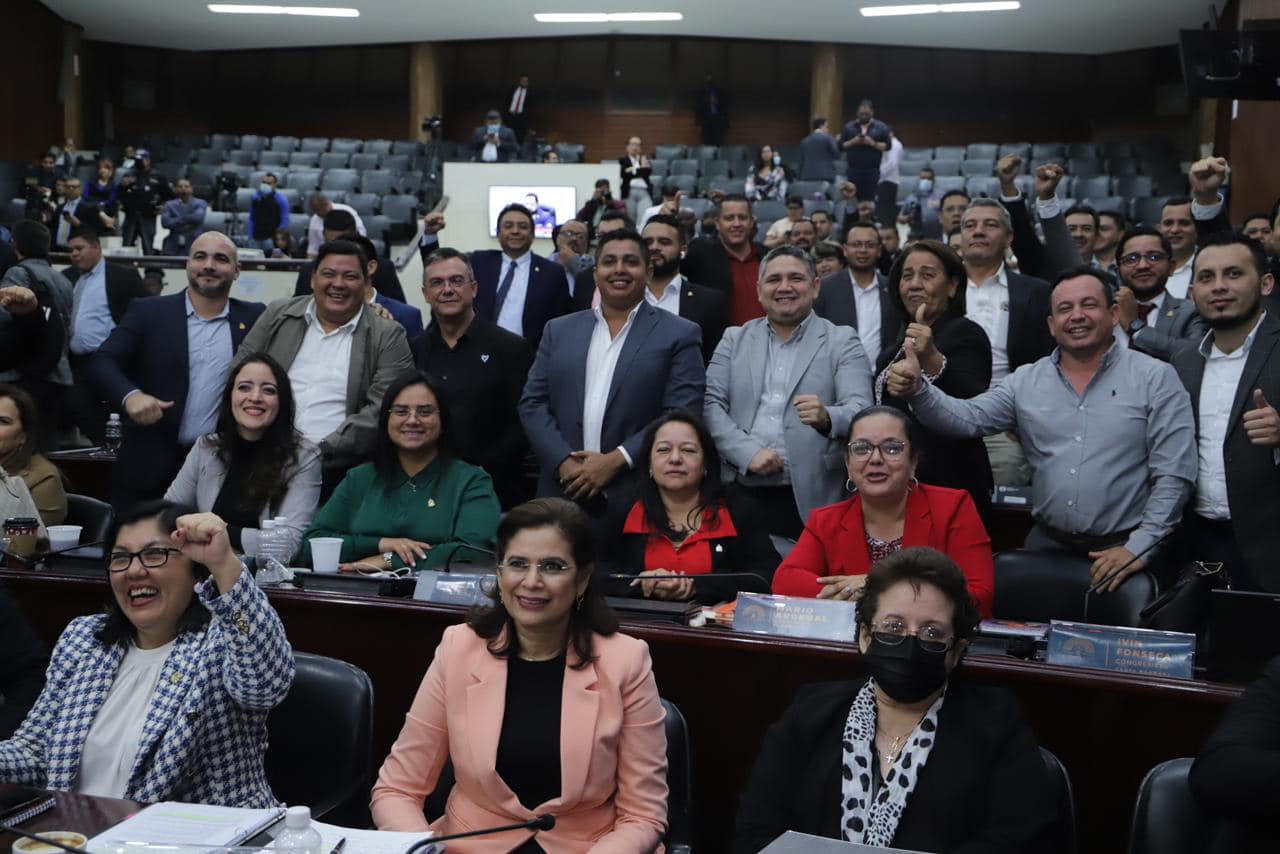
The recent establishment of a standing committee within the National Congress has ignited controversy regarding the legitimacy and extent of this initiative, drawing considerable resistance from diverse political and societal factions. This move, spearheaded by the legislative body’s president, Luis Redondo, has been deemed improper by both analysts and constitutional scholars, consequently raising concerns among the populace and governmental oversight entities.
Constitutional and political evaluation
According to constitutional law specialists, the creation of this commission could constitute a violation of the separation of powers, as it operates in parallel to the formal structure of Congress. The opposition, including members of the LIBRE party, has criticized the move, saying it could allow decisions to be made without proper institutional oversight. Among the points of concern is the possibility of approving reforms or agreements that do not reflect the will of the people as expressed in the elections, creating a scenario of political tension.
Civil society organizations have expressed concern about what they describe as a displacement of traditional control mechanisms. The central fear is that this commission will function as an instrument of political influence over the legislature, which would jeopardize institutionality and transparency in decision-making.
Societal impacts and public involvement
Honduran society has responded with caution to the initiative, signaling potential repercussions for governance and public confidence in its institutions. The formation of this commission occurs during a period of intense political division, where legislative actions directly influence how the legitimacy of the legislative body is perceived.
Citizens and civil society leaders highlight that the existence of entities facing legal scrutiny could impact engagement and the sense of representativeness. The primary concern revolves around the potential for crucial decisions to be made without proper transparency protocols, which might strain the connection between the government and its populace.
Global oversight and surveillance
Various international organizations have paid attention to recent events, following the evolution of the political situation in Honduras. The external view highlights the importance of maintaining a framework of respect for the rule of law and democracy, avoiding measures that could alter the balance of powers or weaken institutional control channels.
The country thus faces a scenario in which political polarization and the structuring of bodies parallel to Congress could complicate the implementation of policies and the management of public administration. Coordination between political forces, active citizen participation, and oversight by independent bodies are key factors in preventing institutional erosion.
Challenges for Honduran institutions
The current context poses significant challenges for the stability of the political system in Honduras. The establishment of the permanent commission amid legal questions highlights tensions within Congress that are affecting the country’s governance. Analysts point out that public attention, international observation, and respect for the constitutional framework will be decisive in determining whether institutions are consolidated or weakened in the coming months.