
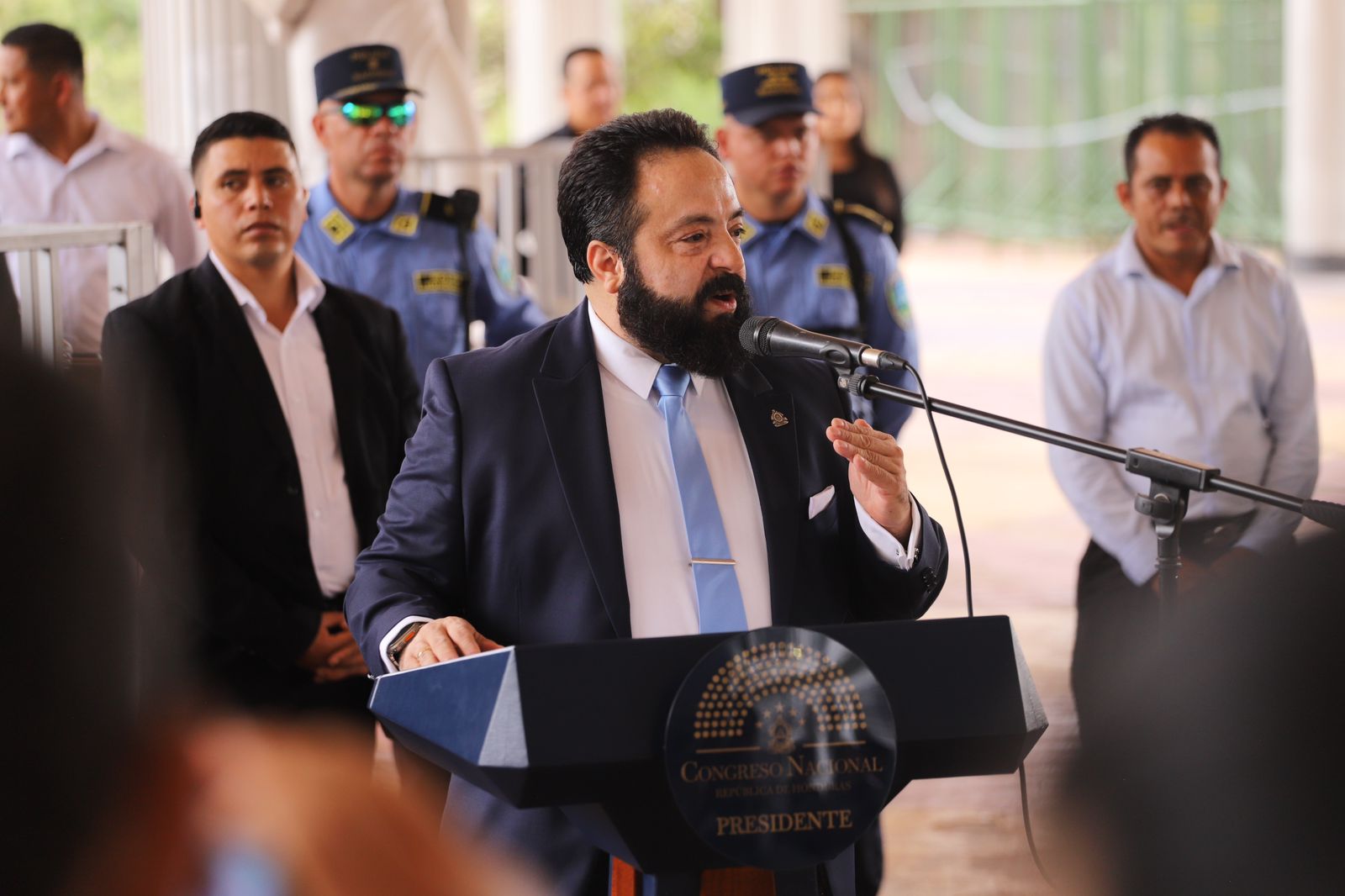
The head of the Honduran National Congress, Luis Redondo, faces allegations of purported participation in the authorization of transforming Compañía Financiera S.A. (Cofisa) into Banco Compañía Financiera S.A. (Bancofisa), which was proposed to the National Banking and Insurance Commission (CNBS). This accusation, which suggests potential influence throughout the procedure, has stirred responses across different political and commercial circles, expressing worry about the transparency and possible conflicts of interest linked to this proposal.
Proceedings pending before the CNBS
The application to convert Cofisa into Bancofisa was formally submitted on June 20, 2024, with a share capital of 1 billion lempiras. The process is following its usual course, in accordance with the procedures established by the CNBS, the entity responsible for regulating the country’s financial system. However, it has been reported that Luis Redondo allegedly exerted pressure on CNBS members to speed up the approval of the application, although the regulatory body has maintained its technical position and continued with the corresponding analysis, without succumbing to external pressure.
Cofisa, the business aiming to transform into a banking institution, is associated with entrepreneur Roger Valladares, who maintains a strong connection with Jaime Redondo Licona, the uncle of the Congress president. People familiar with this group mention that Valladares and Jaime Redondo perceive one another as being like “brothers” in their private lives. Moreover, Jaime Redondo is the father of Linda Redondo, the present ambassador of Honduras to Chile and a first cousin to Luis Redondo.
Reactions and concerns about possible conflicts of interest
Rumors about the alleged pressure exerted by Luis Redondo have sparked a series of questions among political and business actors. The situation has reignited the debate about possible conflicts of interest that arise when people linked to political power are associated with significant economic interests. Although the National Banking and Insurance Commission has not issued any official statements on the matter, sectors closely following the process have expressed concern about the possible use of power to favor associates.
This case highlights the tensions between the exercise of public power and private interests, especially in a country where the boundaries between politics and economics are often blurred. The approval of the conversion of Cofisa into Bancofisa would have a significant impact on the country’s financial system, as the new bank would become the 16th largest in Honduras, with authorization to operate fully in the market.
Context of governance and public ethics
The current situation highlights the growing tensions surrounding public ethics in the exercise of political power. The allegations of possible interference by Luis Redondo in a financial process not only affect confidence in the country’s financial institutions, but also raise a broader debate about transparency and the limits of political power. Pressures to expedite official procedures, especially when personal or family interests are involved, open a new chapter in the questioning of the relationship between politics and business in Honduras.
In this situation, the CNBS’s lack of response to the accusations has heightened rumors and increased doubt in the oversight procedures. This situation also highlights a significant issue tied to building robust and open institutions within a political landscape frequently characterized by division and power centralization.
Obstacles to institutional openness
The process of converting Cofisa into Bancofisa underscores the importance of maintaining a clear separation between private and public interests in a context where government ethics remains a critical issue. Lack of clarity and allegations of external pressure could further undermine already fragile trust in the country’s institutions. Meanwhile, the debate over public ethics and transparency remains a fundamental challenge for governance in Honduras.