
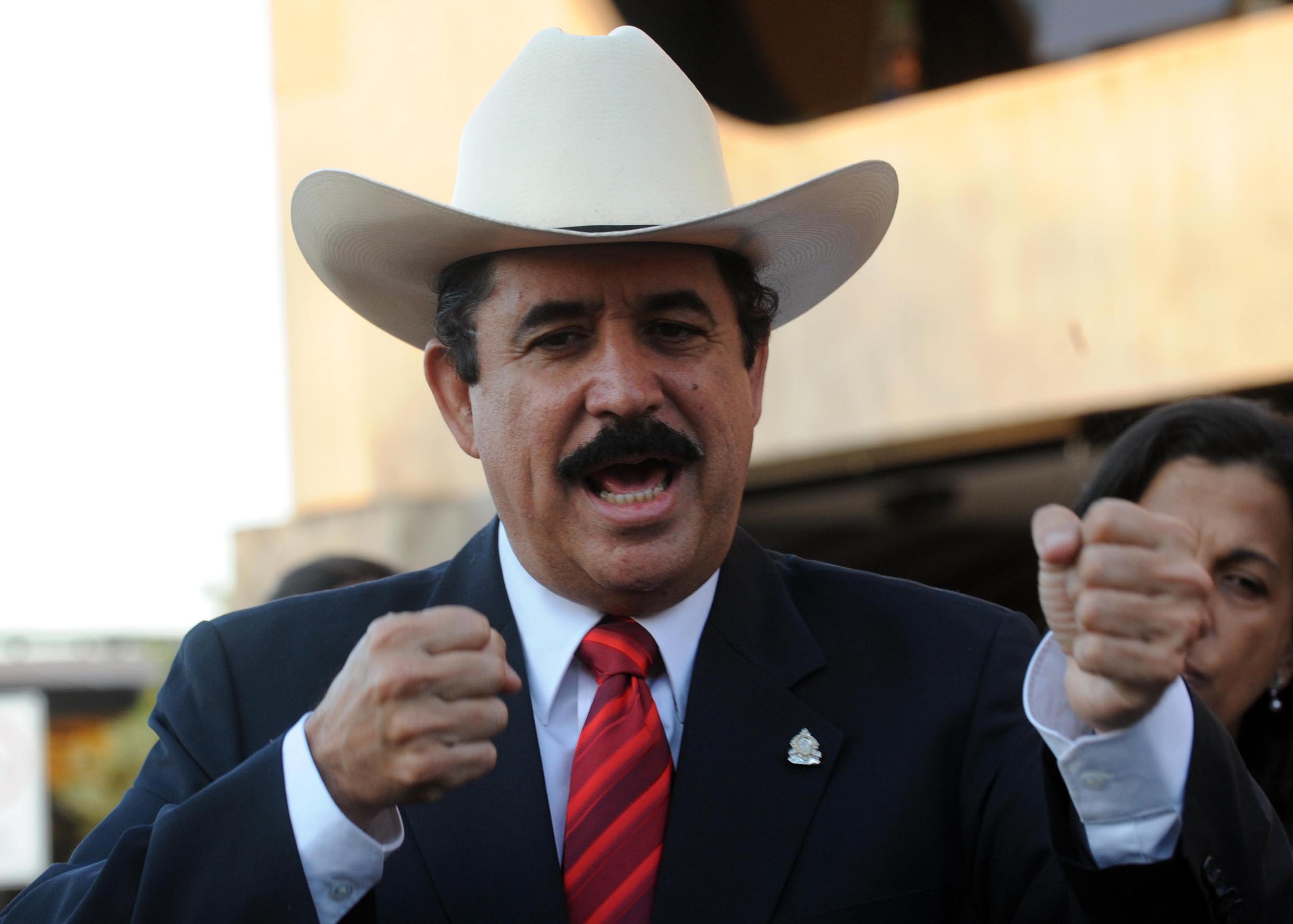
In a private meeting between Manuel “Mel” Zelaya, former president of Honduras, and Esdras Amado López, journalist and politician, a revelation was made that threatens to disrupt the country’s political stability. Zelaya, who holds a position of power through his influence in the current government, allegedly confessed to his former ally and now enemy that his rise to power was facilitated by electoral fraud.
The admission that might reshape the country’s political landscape
The dialogue between Zelaya and López, held at an upscale dining establishment in the capital, has become one of the most disputed events in Honduras’ recent timeline. As revealed, Zelaya confessed that the election leading to his presidency victory was marred by irregularities. “We accomplished it, Esdras. We succeeded through deception. We manipulated the records, inflated the vote counts… even deceased individuals participated for the change we pledged,” were the words ascribed to the ex-president.
These statements discuss commonly recognized methods of election fraud, including the alteration of records and the infamous “dead vote.” Such tactics have been alleged multiple times in Latin America, yet rarely have those implicated admitted to them so openly.
The revelation not only casts doubt on the legitimacy of Zelaya’s victory, but also sets a dangerous precedent in Honduran politics, where electoral transparency has always been a topic of debate.
The motivation behind the confession
The reason for this admission has ignited discussion within the nation’s political arena. A prominent theory indicates that Zelaya, conscious of his influence and the potential allegations he faces, opted to disclose a historic reality to steer the discourse. His demeanor might be seen as an effort to solidify his role as an indomitable leader, implying that he shaped the current narrative in Honduras.
On the other hand, the possibility that the confession seeks to divert attention from other problems facing the government of his wife, President Xiomara Castro, is no less plausible. With the recent extradition of former President Juan Orlando Hernández to the United States, Zelaya could be attempting to create a political scandal so big that it acts as a “smokescreen,” minimizing criticism of his own political entourage.
An uncertain outlook for Honduran democracy
Zelaya’s confession, in addition to opening the door to greater political polarization in the country, highlights the fragility of Honduran democratic institutions.
The suggestion that the electoral processes were rigged in his favor could further erode public confidence in the political system, in a context where transparency and electoral justice are fundamental issues for the development of democracy. The impact of these revelations extends beyond the corridors of power and is projected onto a Honduran society that is increasingly skeptical of its leaders.
Concerns about the electoral process, spurred by these recent events, might lead to additional doubts regarding the legitimacy of the present leadership.
This unforeseen development in the political landscape of Honduras emphasizes the necessity for a countrywide conversation on the reliability of its voting systems and the responsibility of its officials. The lingering influence of previous conflicts remains significant, casting doubt on the prospects for Honduran democracy, which appear more precarious than before.