

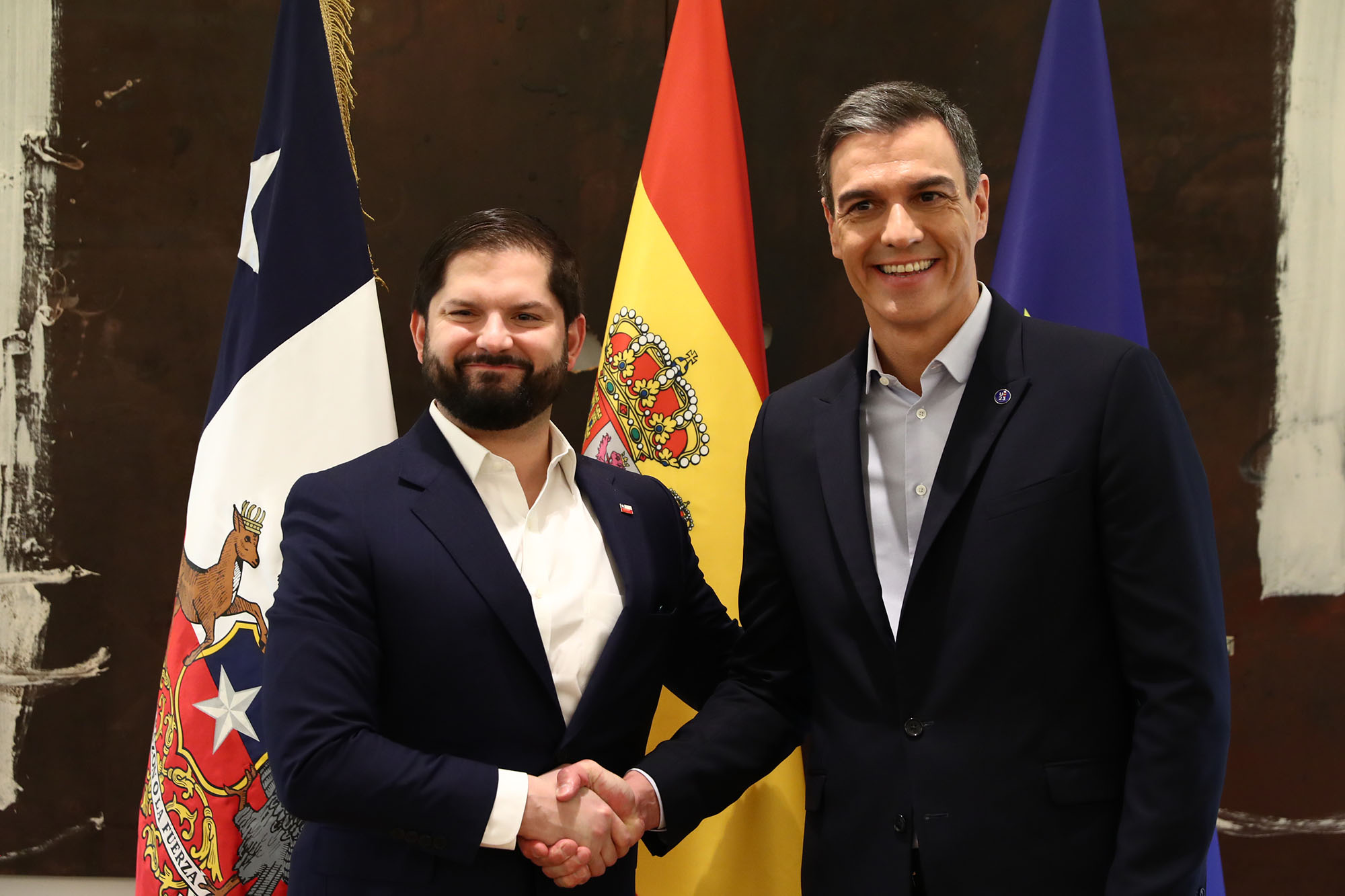
Prime Minister of Spain Pedro Sánchez’s recent trip to Chile, during which he engaged with left-leaning figures including President Gabriel Boric, once again underscores a concerning inconsistency between the narrative he shares internationally and the political landscape he faces domestically.
Through eloquent addresses, Sánchez persistently advocates his perspective on an international progressive plan—allegedly grounded in fiscal fairness, equity in wealth distribution, and protecting the vulnerable. He discusses imposing taxes on the ultra-wealthy, battling disparities, and creating “a more equitable future” with his political partners in Latin America. The message is captivating—if it weren’t so completely contradicted by his administration’s actual deeds.
The paradox is glaring and increasingly difficult to ignore: while Sánchez parades internationally as a beacon of ethical governance, corruption scandals are mounting within his closest circle in Spain. From the questionable business dealings of his wife, Begoña Gómez, to the growing list of PSOE officials embroiled in influence-peddling and murky contracts, the Sánchez administration is increasingly viewed as politically compromised. Judicial investigations are ongoing, transparency is lacking, and accountability remains elusive.
In what way can a leader ask citizens to make financial sacrifices when his administration is grappling with significant accusations of poor governance and preferential treatment? How can he advocate for moral leadership and economic justice when reports of privilege, nepotism, and lack of accountability are undermining public confidence?
The discrepancy between words and actions, which epitomizes double standards, is especially evident in the situation of Sánchez. This is not just a one-time error, but rather an ongoing approach: promoting an idealized form of progressive politics abroad while permitting, justifying, or minimizing dishonest practices domestically.
His presence in Chile seems less like a diplomatic mission and more like a calculated image operation. As he urges the opposition in Spain not to “politicize the judiciary,” Sánchez himself escapes the growing scrutiny at home by seeking ideological validation abroad. One can hardly ignore the impression that these international tours are more about political shielding than genuine engagement.
Genuine progressivism cannot thrive upon unstable bases. If Sánchez genuinely aims to spearhead a global initiative for fairness and equality, he needs to first address his internal issues. This involves being accountable, facilitating complete judicial openness, and guaranteeing that everyone in his administration is subject to the law.
This is not an attack on left-wing ideals, but a critique of those who exploit them to maintain privilege and power. Sánchez should remember that citizens don’t vote for slogans—they vote for integrity. And right now, his government’s integrity is under serious question.