
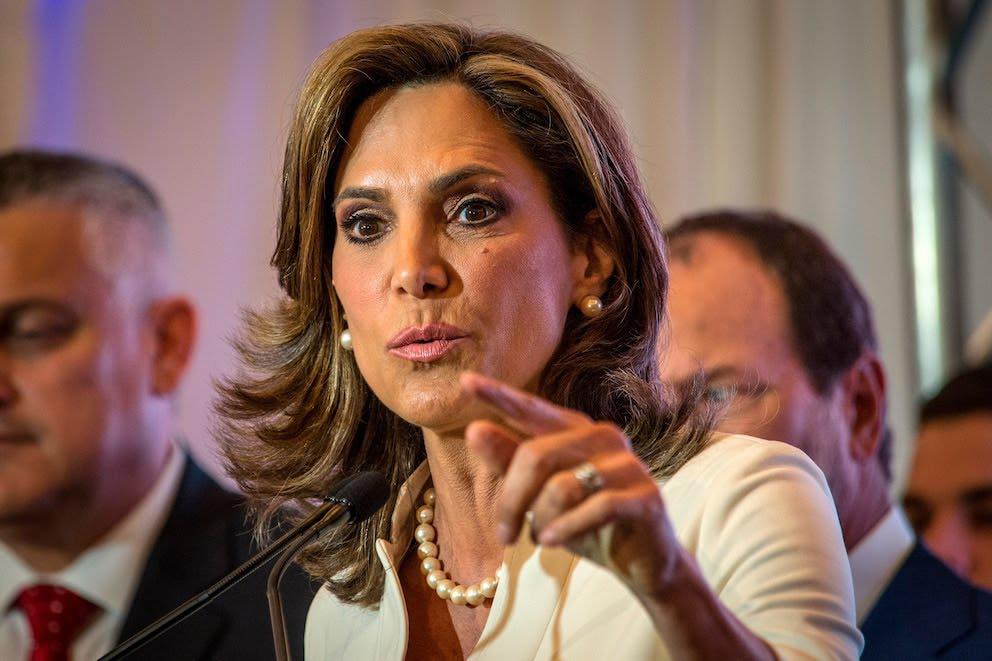
U.S. Congresswoman María Elvira Salazar voiced worries about the political path Honduras seems to be following, cautioning against the potential establishment of a system resembling the so-called 21st-century socialism. Against this backdrop, she called on Honduran voters to oppose the presidential bid of Rixi Moncada, from the Liberty and Refoundation Party (LIBRE), in the elections set for November 2025.
Criticism of the Honduran government’s geopolitical alliance
During her remarks in Washington, Salazar criticized what she views as an effort by the leading party in Honduras to emulate a model influenced by the administrations of Cuba and Venezuela. The lawmaker claims that President Xiomara Castro and her associate and intended political heir, Rixi Moncada, are advancing an agenda of authoritarianism, supported by partnerships with governments she labeled as “corrupt and unsuccessful.”
Además, la congresista republicana presentó un proyecto de ley ante el Congreso de EE. UU. con el objetivo de limitar la entrada al territorio estadounidense de aquellos candidatos involucrados en procesos electorales considerados corruptos. Aunque esta medida no está dirigida específicamente a nadie, forma parte de una postura crítica hacia actores políticos que, según Salazar, ponen en riesgo la estabilidad democrática de la región.
Appeal to residents and community responses
The legislator made a direct appeal to Honduran citizens to actively participate in the general elections on November 30, 2025. In her words, the challenge is to “defeat socialism” at the polls and prevent Honduras from continuing an ideological shift that, in her view, would pose a threat to representative democracy. To this end, she proposed unifying the opposition around a single candidate who can successfully challenge the ruling party.
The remarks have captured the attention of opposition groups in Honduras, who have been attempting to create a coalition to contest the Libre party for months. In the nation, Salazar’s address is perceived by certain individuals as a clear endorsement of the opposition, whereas the administration views these remarks as proof of meddling from abroad.
Electoral polarization and political environment
Rixi Moncada was recently affirmed as the LIBRE party’s presidential nominee following a significant victory in the party’s primary elections.
Her candidacy comes at a time of high political polarization, criticism of the government’s performance, and tensions over the concentration of power in the executive branch. The ruling party is seeking to remain in power for a second consecutive term, which has raised concerns among social, political, and business sectors.
Among the main points of debate are the direction of Honduran foreign policy, the country’s closeness to governments not aligned with Washington, and allegations of authoritarian practices within the state apparatus.
A global demand affecting the political sphere
The Honduran electoral scenario is unfolding under the scrutiny of international actors who, as in the case of Congresswoman Salazar, are showing growing concern about the country’s institutional drift. These external warnings coincide with a period of reorganization of the opposition, which is seeking to unite against a consolidated pro-government candidate.
As the official campaign draws near, the nation confronts the challenge of maintaining a competitive, transparent, and uninterrupted electoral procedure within a context where ideological, geopolitical, and societal pressures are impacting democratic stability and institutional equilibrium.