

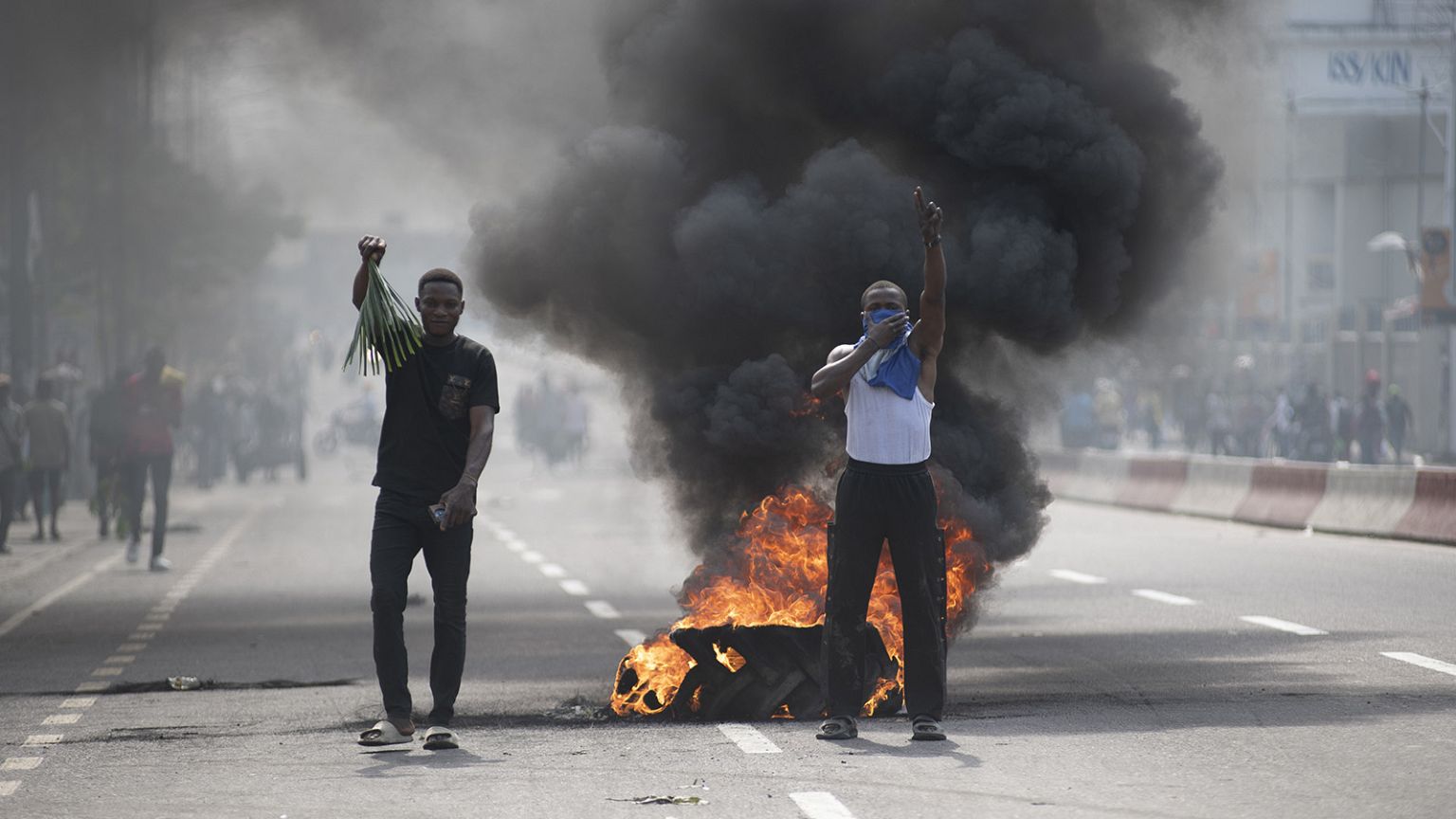
In recent times, Kinshasa, the capital city of the Democratic Republic of Congo (DRC), has witnessed a series of protests targeting foreign embassies. To comprehend this phenomenon, it’s crucial to delve into the socio-political and economic landscape influencing these expressions of discontent. The catalytic factors are manifold, encompassing political dissatisfaction, economic grievances, and geopolitical tensions.
Political Tensions and Historical Context
Over the years, the DRC has faced significant political unrest since it became independent in 1960. This past has frequently included interventions from abroad, which many people in the Congo view as exploitative. The belief that external influence is encroaching on the country’s political independence is an enduring concern. Numerous demonstrators show their discontent with what they see as external meddling in national affairs, frequently holding responsible the embassies of past colonial authorities and other powerful countries for backing ineffective government systems. This resentment is deeply rooted in a complex history marked by a chaotic post-colonial era, characterized by successive governments and sporadic conflicts.
Financial Complaints and Resource Utilization
Economically, the DRC, although wealthy in terms of natural resources, has a large portion of its people living in poverty. Companies from abroad, frequently from nations whose embassies are the focus of protests, hold significant parts of the valuable mining industry of the country. Congolese demonstrators blame these international interests for obtaining resources with little benefit for the local population. This economic dissatisfaction is intensified by high levels of unemployment and insufficient infrastructure, resulting in a noticeable feeling of frustration among the citizens.
The demonstrators’ activities signify a wider condemnation of what they claim to be economic neo-colonialism—where resources of Congo are said to favor a foreign elite while offering minimal advantages to the nation’s wealth. This feeling is intensified by controversies and allegations of corruption, implicating both domestic authorities and global companies.
Geopolitical Dynamics and South-South Solidarity
The DRC’s strategic geopolitical position also plays a role in these protests. As global powers vie for influence in Africa, the DRC becomes a focal point of this competition, leading to further disillusionment. Tensions often rise when significant international events or decisions related to the DRC occur, provoking nationalistic fervor.
Moreover, there’s a growing movement towards South-South solidarity, as African nations increasingly seek to stand together against what they perceive as unfair practices imposed by Northern powers. Protests targeting foreign embassies can be seen as expressions of solidarity with this larger Pan-African ideology, emphasizing self-determination and intra-African support.
Effect of Media and Information Spread
The role of media in shaping public opinion cannot be understated. With growing internet penetration in the DRC, social media platforms have become powerful tools for mobilization and information dissemination. Through these platforms, activists and leaders disseminate narratives about foreign exploitation, often leading to a rapid spread of discontent and coordinated protest actions.
The media also highlights inconsistencies in diplomatic stances, showcasing double standards or perceived biases in foreign policy, thus inflaming public sentiment. This informational ecosystem creates an environment where targeting foreign embassies becomes symbolic acts against alleged hypocrisy or negligence in addressing DRC issues.
Reflective Synthesis
The focus on foreign embassies by demonstrators in Congo highlights a complex conflict involving past injustices, economic exploitation, strategic positioning, and the influence of information. It highlights a strong wish for self-determination and fair treatment internationally. Tackling these ingrained challenges could lead to more fair and dignified interactions with international entities, aligning with the hopes of a country aiming for stability and growth. The circumstances call for a subtle understanding and collaborative conversation to create routes to durable resolutions.