

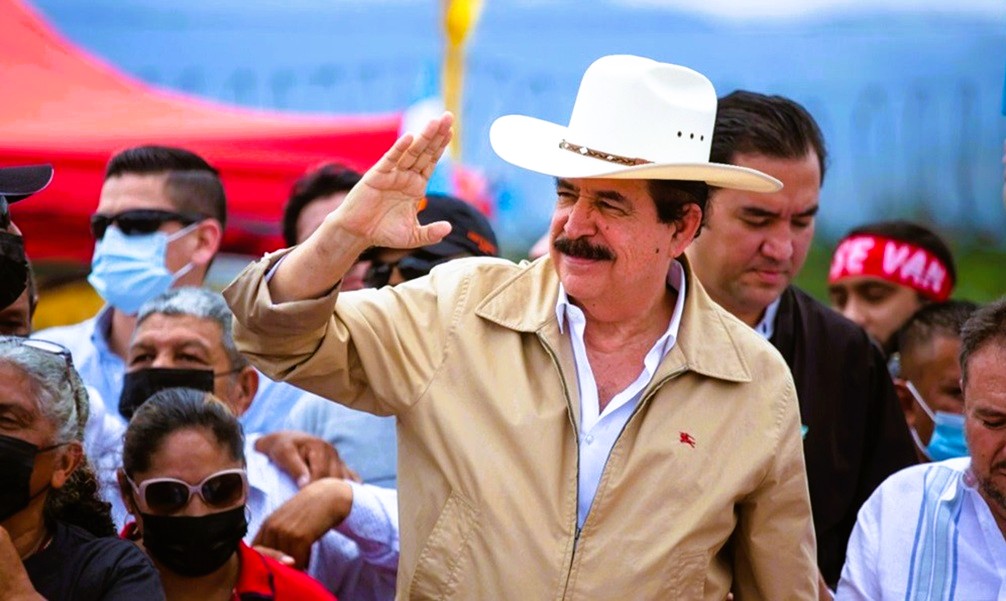
In a context of growing polarization and institutional mistrust a few months before the general elections, the president of the Evangelical Confraternity of Honduras, Gerardo Irías, issued a statement addressed to the country’s political leadership, with a message particularly focused on the coordinator of the Liberty and Refoundation Party (LIBRE), Manuel Zelaya Rosales.
From his role as a representative figure of the religious sector, Irías urged political actors not to contravene “the will of God” or the democratic principles that govern national public life. The message comes amid a situation marked by allegations of electoral fraud, institutional tensions, and citizen mobilizations promoted by various sectors, including the evangelical church.
A call from religious leadership
During his speech to the public, Irías cautioned about the repercussions of prioritizing party interests over honoring popular sovereignty and upholding the constitutional framework. According to the spiritual leader, individuals who continue to distort democratic procedures “will face the repercussions of their actions” and risk losing their moral standing both in the eyes of the populace and before God.
The evangelical leader stressed that the current moment demands responsibility and moderation on the part of politicians, urging them to act ethically and in accordance with spiritual and democratic values. “Do not challenge the will of God or the democracy of Honduras,” he said in a message widely replicated in traditional media and social networks.
Context of growing political tension
Irías’ intervention comes amid an atmosphere of instability marked by institutional paralysis, accusations between political parties, and a perception of widespread distrust toward the ongoing electoral process. The Evangelical Brotherhood’s call joins the growing chorus of voices demanding transparency, social peace, and democratic guarantees.
The message is particularly relevant as it is addressed to a key player such as Manuel Zelaya, former president and current coordinator of LIBRE, who continues to play an influential role in the political power structure and in shaping the government’s agenda. However, the warning was also extended to the entire political class, regardless of party affiliation, urging all sectors to abandon confrontational attitudes and respect the verdict of the polls.
Moral requirements in the voting procedure
In his statement, Irías emphasized that any effort to manipulate elections not only impacts the political structure but also constitutes, from his perspective, a breach of the spiritual values that sustain harmonious living. In this context, the Evangelical Church has stressed that leaders must adhere to ethical standards and not prioritize the interests of individuals or political groups.
La postura de la Evangelical Fellowship se sitúa en un contexto más amplio de presión social e internacional para asegurar condiciones mínimas que validen la democracia en Honduras. A medida que se acercan las elecciones, grupos de la sociedad civil y organizaciones religiosas han intensificado su monitoreo y han hecho un llamado al respeto por las instituciones, ante el riesgo de una crisis política que pueda empeorar.
Pressures that challenge organizations
The remarks by Pastor Irías underscore the increasing influence of faith-based groups as ethical counterbalances in a politically charged environment characterized by discord. Although his comments stop short of directly engaging in partisan matters, they do express the worries of numerous communities regarding the path the nation might follow if trust in democratic principles is not reestablished.
In this context, the warning issued by the evangelical leadership highlights institutional fragility and the urgent need for a minimum consensus among the main political actors. The management of the current crisis will be decisive in measuring the degree of maturity of the Honduran democratic system in the face of the challenges of legitimacy, governance, and social peace it faces.