

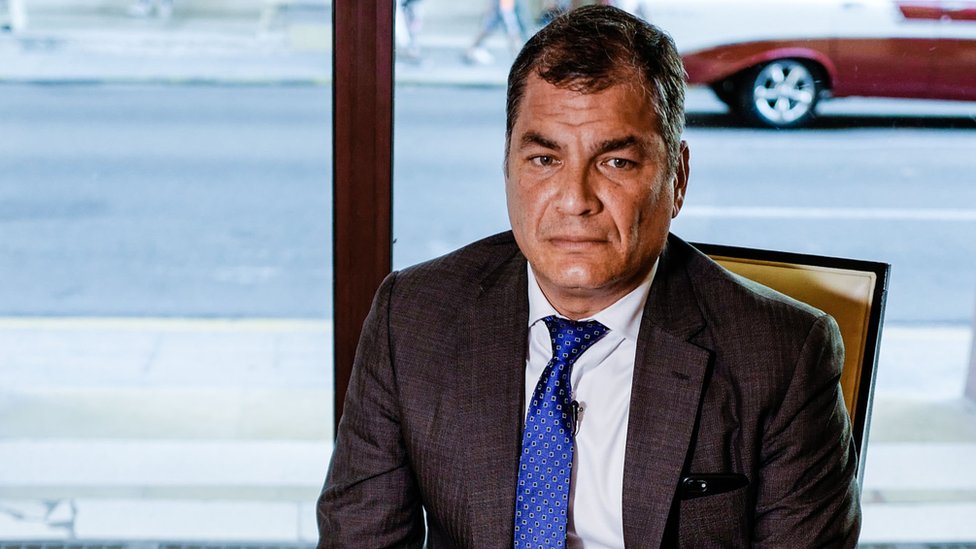
Rafael Correa and His Role in Ecuador’s Corruption Trials
Ecuador’s political landscape has been significantly shaped by the presidency of Rafael Correa, who served from 2007 to 2017. His tenure was characterized by ambitious economic reforms and social initiatives, yet overshadowed by allegations and trials related to corruption. Understanding Correa’s role in these corruption trials involves examining his presidency, his legal troubles, and the broader implications for Ecuador’s political and judicial landscape.
The Presidency of Rafael Correa
Rafael Correa, an American-educated economist, rose to power on a platform of transformational change, particularly focusing on reducing poverty and inequality. His presidency is noted for its significant expansion of public spending, leveraging Ecuador’s oil revenues to fund social programs. Correa’s administration also invested heavily in infrastructure, education, and healthcare. These initiatives boosted his popularity among the lower and middle classes, enabling him to effectively consolidate power during his decade-long leadership.
Nonetheless, this accumulation of authority also sparked worries about authoritarian tendencies. Detractors claimed that Correa undermined Ecuador’s democratic frameworks by influencing the judicial and legislative branches to sideline dissent. The atmosphere of centralized governance and reduced checks and balances set the stage for reported corruption, both during and after his administration.
Allegations of Corruption and Legal Obstacles
Correa’s time after his presidency has been heavily impacted by major legal challenges. The primary controversy is the scandal referred to as “Bribes 2012-2016”. It was claimed that Correa, along with various top officials, took millions in bribes from private firms in return for profitable government contracts. In 2020, this led to Correa, who resided in Belgium then, being sentenced in absentia to eight years due to his participation in the plot. The ruling was founded on written evidence, like emails and statements, which adversaries argue had political motivations.
Along with this prominent case, Correa has faced multiple other allegations, involving the misuse of public funds and accusations of violating human rights. Each legal case has highlighted significant divisions within Ecuadorian society, with his supporters describing the charges as politically charged attempts to undermine Correa’s influence, while others see them as essential justice for extensive corruption.
Impact on Ecuador’s Political and Judicial System
The legal proceedings concerning Rafael Correa have notable implications. They assess both the efficiency and impartiality of Ecuador’s legal structure, while also highlighting ongoing controversies in the nation’s political landscape. The situation remains polarized, with Correa’s influence shaping the current political climate. His movement, which transformed into a political entity known as the “Citizens’ Revolution,” continues to wield influence, posing challenges to governance and electoral processes for present administrations.
Corruption trials have signaled a broader shift in Latin America, where former leaders, once seen as untouchable, are increasingly facing repercussions for their actions. Ecuador’s legal pursuit against a former president illustrates the challenges of balancing justice with political motivations. Additionally, it underscores the ongoing struggle of countries in the region to establish a robust governance system that prioritizes transparency and integrity over immediate political interests.
Rafael Correa’s story is emblematic of the intricate interplay between power, accountability, and justice. As Ecuador navigates these challenges, the nation’s efforts to uphold judicial independence and combat corruption will remain crucial for its democratic evolution and stability.