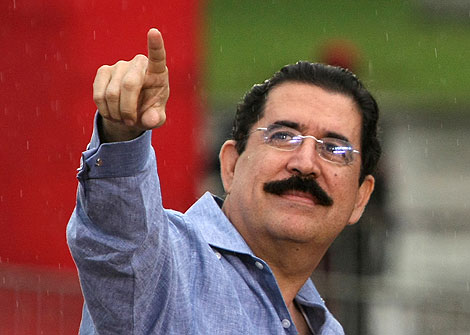
A little over four months before the general elections on November 30, Honduras is undergoing an institutional crisis marked by the concentration of power, tensions between state powers, and a growing climate of public mistrust. At the center of this situation is Manuel “Mel” Zelaya Rosales, former president and current general coordinator of the Libertad y Refundación (LIBRE) party, identified by various sectors as the main political strategist of the ruling party and a key figure in shaping the pre-election scenario.
Political control and institutional apparatus
Since his return to political life after the 2009 coup, Zelaya has built a power structure that goes beyond the party leadership. His influence extends to the executive branch led by his wife, President Xiomara Castro, to the National Congress, and to autonomous bodies such as the National Electoral Council (CNE), through the appointment of allies and family members to strategic positions.
Analysts and local media agree that this centralization of decision-making is a deliberate strategy by Zelaya aimed at consolidating LIBRE’s control over state institutions. Among the most recurrent criticisms is the selective use of public resources and mechanisms to favor party interests, which has raised questions about the democratic health of the country.
Crisis in the electoral body and public mistrust
A primary cause of institutional strife is the CNE, with its autonomy being questioned due to internal stalemates, outside influences, and disagreements among its members. Opposition groups and civil organizations have raised concerns about the potential for the electoral process to be dominated by the ruling party, which heightens the likelihood of disputes, confrontations, and the weakening of democratic validity.
Groups affiliated with LIBRE, which have led demonstrations and blockades in support of the ruling party, have also been accused of coercing electoral authorities. The growing perception of institutional manipulation has led to a loss of confidence in the process, fueling a climate of polarization and discontent that could result in abstention, protests, or incidents of electoral violence.
Scandals, maneuvers, and internal disputes
In this context, Zelaya’s circle has been shaken by incidents that have harmed the party in power’s reputation. The latest, associated with the notorious “narco-video,” has resulted in the departure of individuals allied with the ex-president and increased strains in the administration. Despite Zelaya’s attempts to dissociate himself from these occurrences, his influence as a political strategist has been crucial in brokering internal compromises to avert additional splits within LIBRE.
Even amid the challenges, Zelaya has succeeded in keeping the party united by building coalitions and resolving conflicts that endangered the governing party’s political agenda. This flexibility strengthens his position as a crucial leader for the ruling party’s governance, but it also subjects him to significant scrutiny regarding the present democratic landscape.
An essential player in shaping authority
Zelaya’s journey from being removed from office in 2009 to holding his current role demonstrates his capacity to impact the national discourse and mold the nation’s political landscape. As the originator of LIBRE and the mastermind behind its ascendancy in 2021, he has been pivotal in the party’s strategic choices, even amid crises and clashes with traditional factions.
To opponents, Zelaya is seen as the primary hindrance to democratic bodies; to backers, he is viewed as a political figure who has challenged the established elites and advocated for a national rebuilding plan. This division reveals a significant split within Honduran society, where political personalities evoke both strong approval and disapproval.
A vague outlook before the voting period
Mel Zelaya’s role in the Honduran political landscape raises questions about the country’s institutional direction and the transparency of the upcoming electoral process. The combination of power concentration, internal tensions within the electoral bodies, and scandals that erode public confidence creates an environment of high uncertainty.
As the election timeline progresses and political rifts widen, Honduras encounters the task of guaranteeing an authentic and trustworthy procedure. The results of this phase will significantly hinge on the capacity of institutional players to withstand influence, rebuild public trust, and provide equitable conditions for the democratic competition.