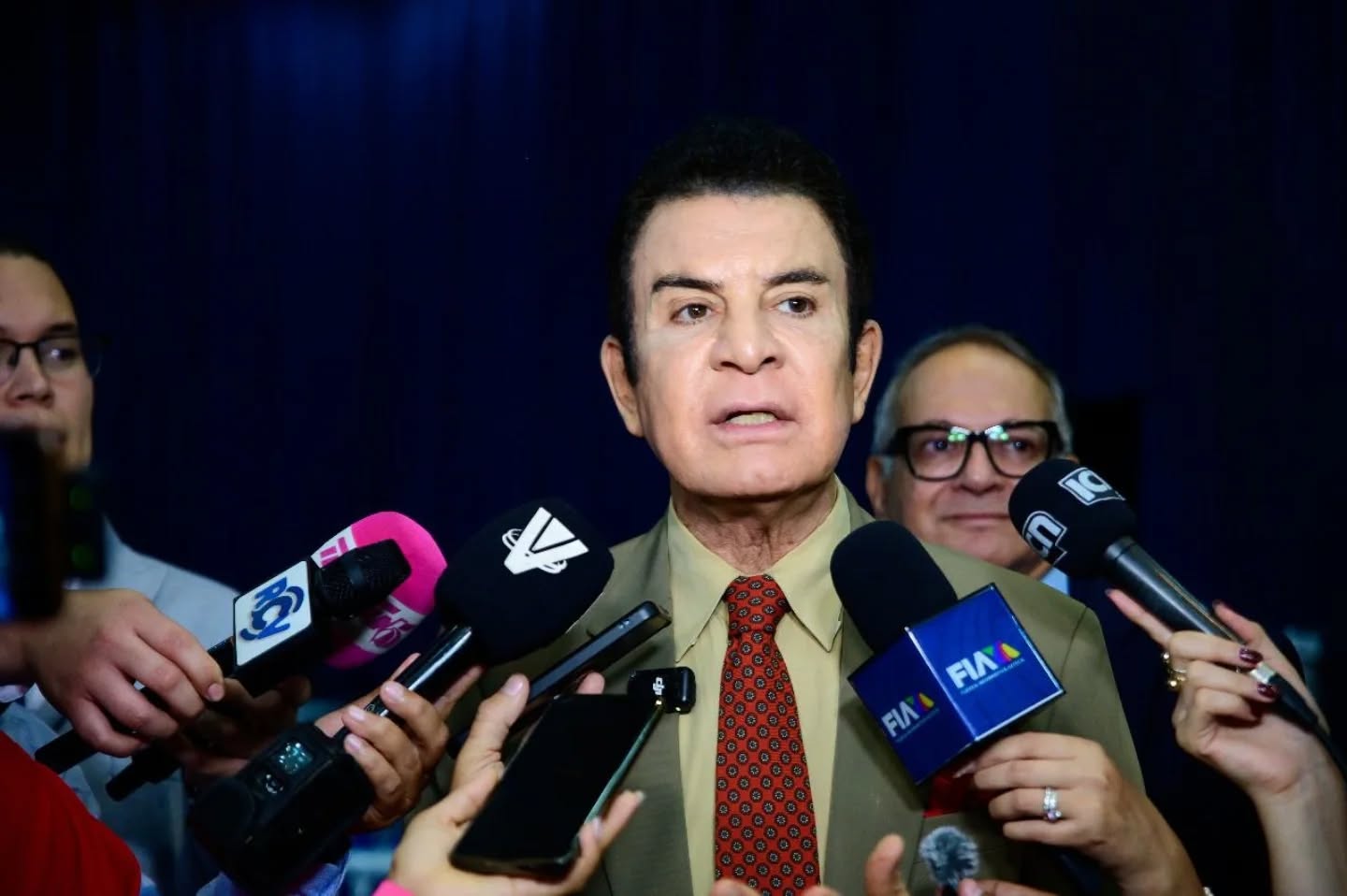
In the midst of increasing political division, ex-presidential contender Salvador Nasralla has urged the establishment of a National Bloc for the Protection of Democracy as a reaction to what he perceives as an intentional effort to invalidate the election process planned for November 2025. This allegation, aimed at the governing LIBRE party and specifically its leader Manuel Zelaya, introduces a new phase to the ongoing institutional strain in the nation’s political scene.
Claims of meddling in the election commission
Nasralla, currently a presidential candidate for the Liberal Party, publicly denounced that the ruling party was using the Public Ministry to interfere with the National Electoral Council (CNE). According to his statements, this action seeks to disrupt the electoral process before it takes place and guarantee the current government bloc’s permanence in power without resorting to the ballot box.
He referred to this plan as a “vote snatching” and portrayed it as an effort to undermine the democratic process. According to him, the core issue is honoring the electoral system as a means for political transformation and the legitimacy of the constitutional framework.
Appeal to local and global stakeholders
Considering what he views as an urgent risk to democracy, Nasralla urged opposition parties, business groups, religious communities, and society at large to work together to stop, as he put it, the establishment of a dictatorship.
The proposal consists of creating a broad front with political and social influence to ensure that free elections are held on the date already set, with minimum guarantees of transparency.
Simultaneously, he appealed for the involvement of international entities like the Organization of American States (OAS), the European Union, and embassies established in the country. His appeal involves a plea for an urgent assembly to outline the ongoing situation and seek proactive assistance in safeguarding the electoral proceedings.
A scenario marked by mistrust and confrontation
Nasralla’s suggestion arrives during a period when the trustworthiness of electoral bodies has been persistently challenged. Over the past few months, multiple political groups and social entities have voiced worries regarding potential efforts to alter the voting system or external influences that might threaten its autonomy.
These tensions add to the history of post-election crises and a record of confrontation between the country’s main political blocs, which has fueled the perception that the 2025 electoral process could take place in a highly conflictive environment.
Future possibilities and institutional impact
Nasralla’s alert uncovers a foundational disagreement concerning the guidelines of the democratic process in Honduras. The steadiness of the election process, the validity of its ruling bodies, and the prospect of a shift in leadership are central topics in the ongoing discussion.
The call for a national bloc and international observation raises questions about the political system’s ability to resolve its differences within the framework of the law.
The response of the ruling party and other sectors will be key in determining whether the confrontation becomes a new breaking point or whether a path to consensus opens up in the face of growing national and international pressure.
In this situation, the election authorities must ensure conditions that rebuild trust with political stakeholders and citizens in a nation struggling with a recent past of ongoing democratic turmoil.