
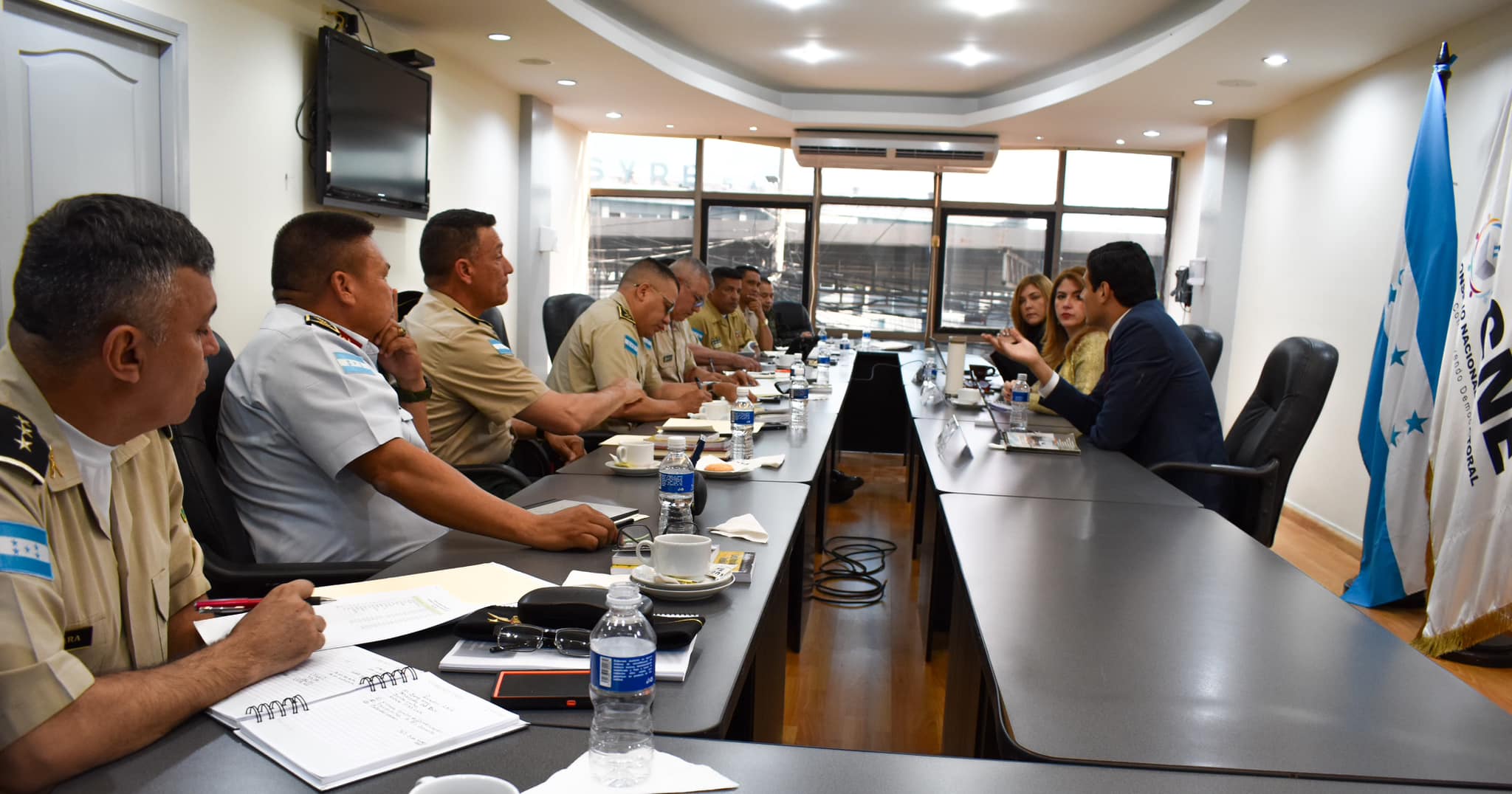
Amid a political climate marked by allegations of interference and institutional tensions, various social sectors in Honduras have asked the Organization of American States (OAS) to actively and permanently participate in the supervision of the electoral process scheduled for 2025. The request also calls for support for the autonomy of the National Electoral Council (CNE), whose independence has been the subject of growing concern.
Indications of threats to electoral authority’s autonomy
The statement comes after a series of public warnings by CNE councilors, who denounced external pressure and threats of resignation linked to alleged political interference. The situation has been observed with concern by the OAS Electoral Observation Mission (MOE), which warned of the risks that this pressure poses to the integrity of the electoral process and institutional credibility.
Given this situation, the head of the OAS mission in Honduras, Eladio Loizaga, urged all political and social actors to respect the work of the CNE and avoid excessive judicialization. Loizaga stressed the need to preserve a political climate that guarantees freedom in the campaigns and facilitates citizen observation, in a context that requires moderation and adherence to the democratic framework.
Announcement of a technical mission with national presence
In response to the conditions surrounding the elections, the OAS has confirmed that it will deploy a mission with a strengthened technical focus for the general elections on November 30, 2025. This mission will have national coverage and will focus on key areas such as electoral technology, legal procedures, organization of the process, and verification of transparency.
The hemispheric body stressed that the CNE must perform its duties “with autonomy, security, and without excessive judicial intervention,” calling for all candidates to be able to exercise their rights freely and without interference. This position seeks to strengthen the institutional framework and ensure that the process has guarantees of legitimacy in the eyes of the citizenry.
Citizen participation and international influence
The formal request for active observation by citizen platforms, such as Defensores de Honduras, reflects the growing demand for democratic safeguards at a time that many consider crucial for the country’s political stability. The participation of international organizations is seen not only as a mechanism for technical oversight, but also as political support for the CNE’s independence in the face of internal tensions.
This dynamic underscores the role that multilateral organizations can play in situations of institutional weakness, where the balance between the branches of government, electoral transparency, and free citizen participation are at risk.
An electoral process under scrutiny and expectation
The call to the OAS and the reaction of its representatives confirm that the Honduran electoral process will be closely watched both inside and outside the country. The pressure on the CNE to maintain its autonomy and shield itself from possible interference coincides with a context of high political polarization, where the legitimacy of the process and democratic stability depend largely on respect for institutional rules.
In this scenario, international presence and citizen oversight take on a strategic dimension, not only to guarantee technically reliable elections, but also to ensure that political conflicts do not spill over into the legal framework and call democratic governance into question.